
America's Path Forward
Where the United States stands, where it falls behind, and the bold technological leaps needed to lead the next century of human innovation.
The Technology Gap at a Glance
A comparative analysis of US technological readiness versus leading competitors across six critical domains.
Readiness Score Comparison
US vs Leading Competitor (0-100 scale)
Infrastructure
Building the Backbone of Tomorrow
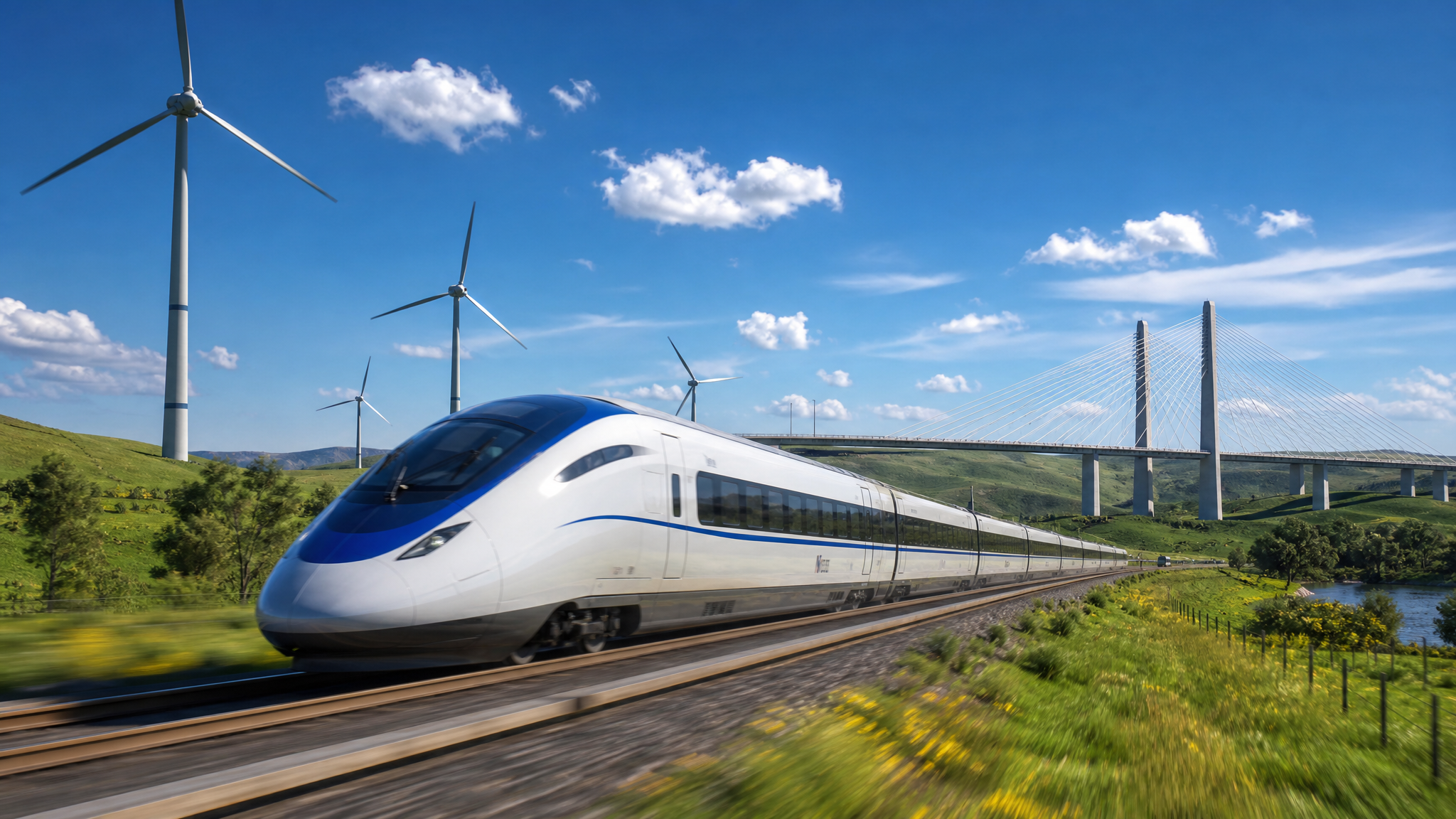
The contrast is stark: China has built the world's largest high-speed rail network at 48,000 km and counting, while the United States has zero kilometers of true high-speed rail. America's infrastructure earned a C grade from the ASCE in 2025, with roads at D+ and energy at D+.
Roughly 70% of US transmission lines and transformers are over 25 years old. Large power transformer lead times have stretched to 36-60 months. About 39% of major US roads are in poor or mediocre condition, and 6.8% of the nation's 623,000 bridges need urgent attention.
The path forward demands long-duration infrastructure planning, faster permitting, stronger domestic manufacturing for grid hardware, and real HSR corridors that can compete with air travel on dense routes. The funding momentum exists — the challenge is converting dollars into built infrastructure at the speed demand requires.
The US has funding momentum but operates on yesterday's capacity while tomorrow's demand from AI, electrification, and data centers is already arriving.
Action Required
- 1Deploy nationwide high-speed rail corridors on dense routes
- 2Modernize the electrical grid with smart grid technology
- 3Accelerate permitting reform for major infrastructure projects
- 4Rebuild domestic manufacturing for critical grid components
Artificial Intelligence
The Race for Cognitive Supremacy

The US remains the global leader in frontier AI, but the gap is closing fast. The 2026 Stanford AI Index reveals the US-China model performance gap has effectively closed to just 2.7%. While the US still leads in top-tier model production and private investment at $285.9 billion, China dominates in research volume, citations, patent output, and industrial robot installations.
Perhaps most alarming: the number of AI researchers and developers moving to the US has fallen 89% since 2017. China benefits from national industrial scale, coordinated state planning, and massive compute infrastructure investment.
The US must convert its frontier-model advantage into a deployment advantage. That means more compute access, better immigration and talent retention policies, tighter links between research labs and manufacturing, and faster AI adoption across healthcare, logistics, defense, and public services.
The US leads in investment but China leads in scale. The countries that pair models with industrial execution will own the next decade.
Action Required
- 1Reform immigration to retain top AI talent
- 2Accelerate AI deployment in healthcare, logistics, and defense
- 3Expand domestic compute infrastructure
- 4Bridge the gap between research labs and industrial applications
Space Exploration
The New Frontier Competition
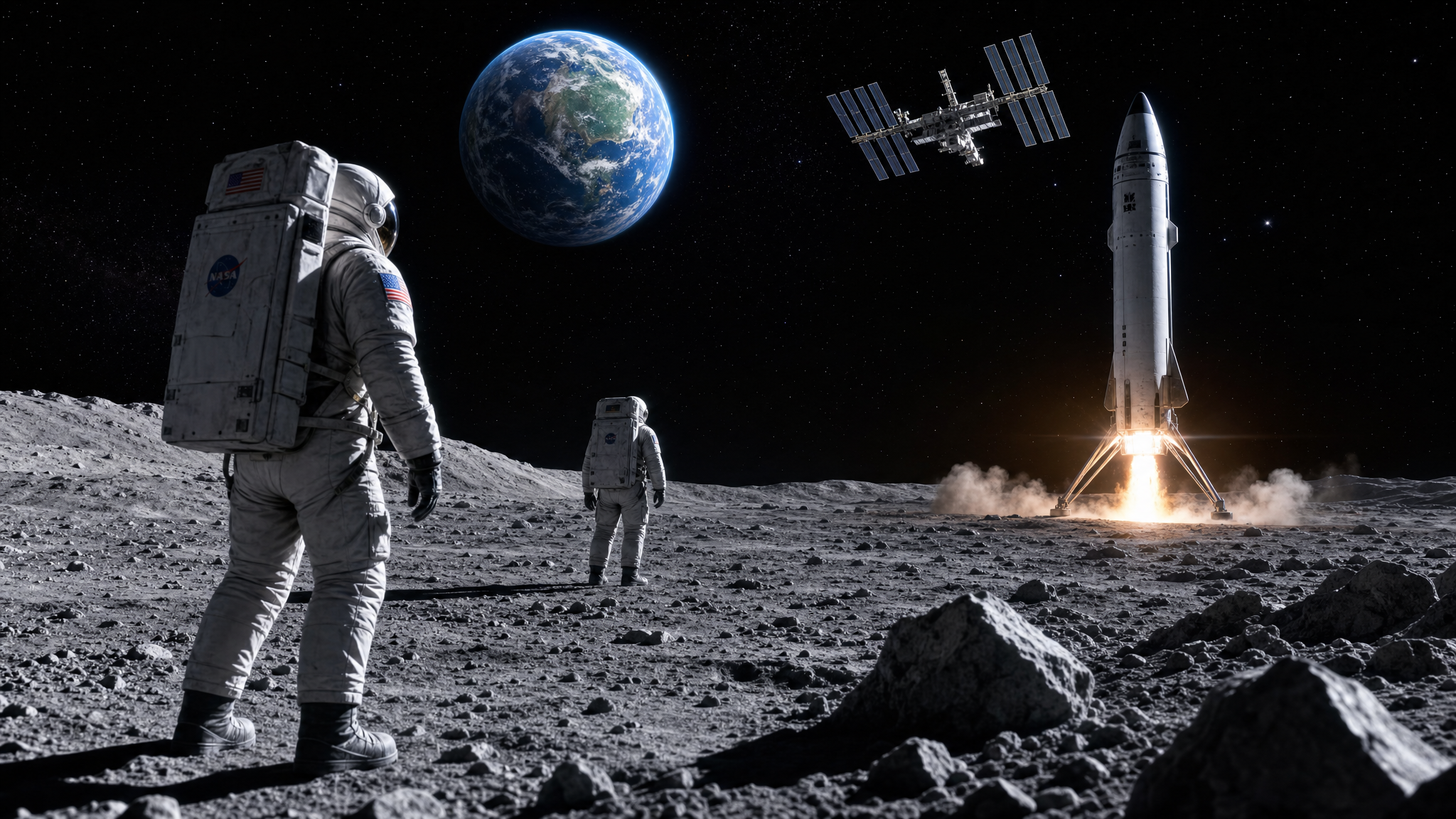
Space is where ambition meets cadence. The US has the strongest commercial launch ecosystem, but China has built a steady, state-backed lunar and orbital tempo that demands respect. Artemis II launched on April 1, 2026, but the program has faced repeated delays, with Artemis III pushed to 2027.
Meanwhile, China's Tiangong station is fully operational and permanently crewed. In June 2024, Chang'e-6 returned 1,935.3 grams of lunar samples from the far side of the Moon — a historic first. Russia's civil space program, once dominant, has lost about 90% of its launch service contracts.
The US needs steadier funding, faster hardware maturation, and fewer mission resets. It should treat lunar infrastructure the way China treats orbital infrastructure: as a long game with annual cadence, not an occasional spectacle. The real competition isn't about planting flags — it's about who owns the infrastructure layer of cislunar space.
The US has the larger commercial ecosystem, but China has faster state-driven mission cadence and a functioning orbital lab with continuous crews.
Action Required
- 1Maintain steady Artemis mission cadence without schedule resets
- 2Build permanent cislunar infrastructure
- 3Strengthen commercial-government space partnerships
- 4Invest in in-space manufacturing and resource utilization
Renewable Energy
Powering the Clean Revolution
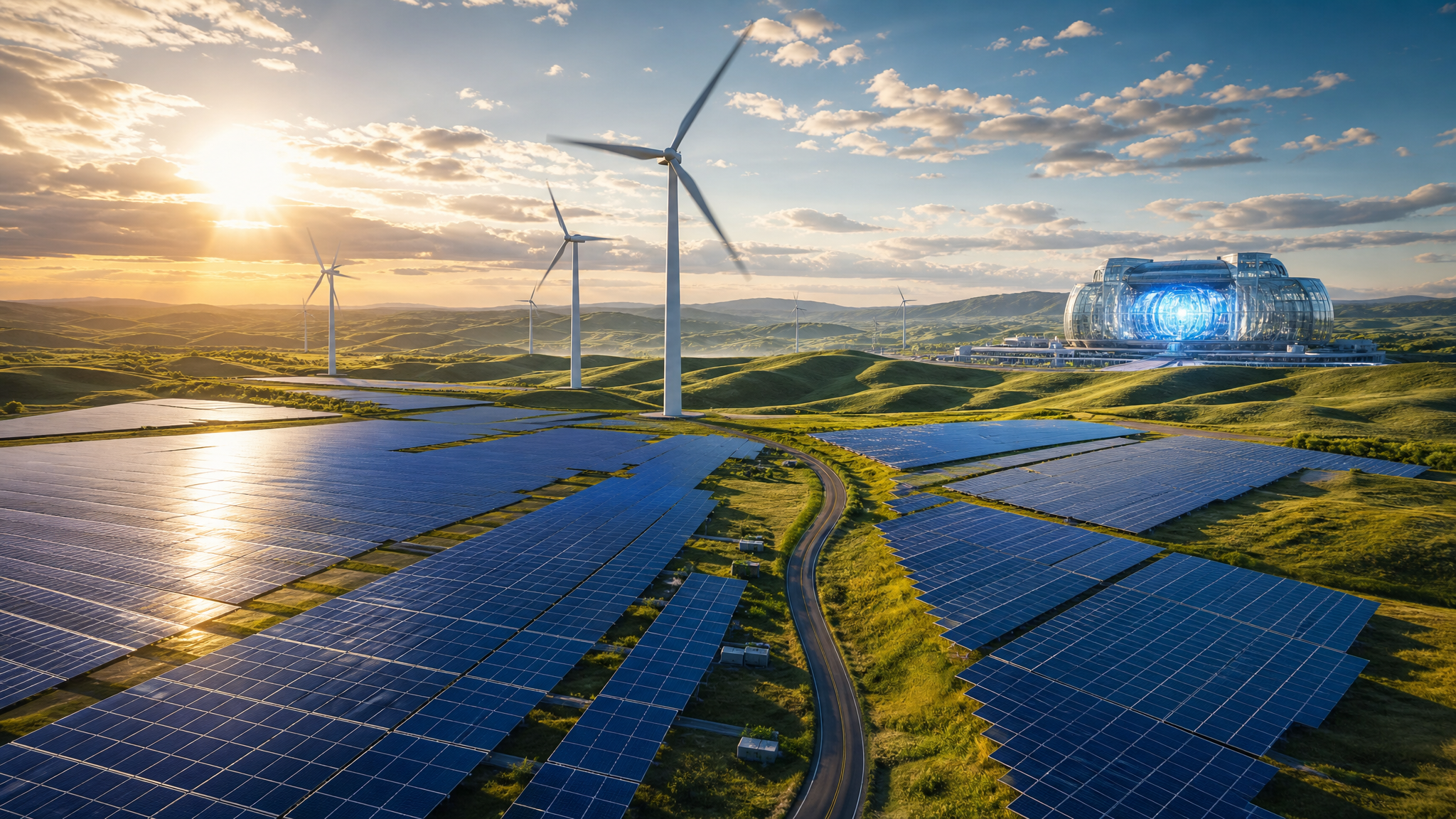
This is one of the starkest industrial gaps. China doesn't just lead in renewable energy — it owns the manufacturing base. The IEA reports China's share of key solar manufacturing stages exceeds 80%, producing 98% of solar wafers, 92% of solar cells, and 85% of solar panels globally.
China invested over $625 billion in clean energy in 2024 and reached its 2030 wind and solar targets six years early. It added 79.3 GW of wind capacity, bringing total wind capacity to 521 GW. The US invested $272 billion and added 33 GW of solar and wind — substantial, but not at the same scale.
In fusion research, China's EAST tokamak sustained plasma for 1,066 seconds at 70 million°C in 2025. The US must rebuild domestic manufacturing for solar, batteries, inverters, and grid equipment. Clean energy isn't just a generation challenge — it's a supply chain and infrastructure challenge that demands industrial-scale thinking.
China's clean-energy machine is now so large it no longer looks like a transition. It looks like an industrial system.
Action Required
- 1Rebuild domestic solar and battery manufacturing capacity
- 2Accelerate transmission buildout and storage deployment
- 3Implement comprehensive permitting reform
- 4Increase fusion research funding and facility development
Fundamental Scientific Research
The Foundation of Future Power
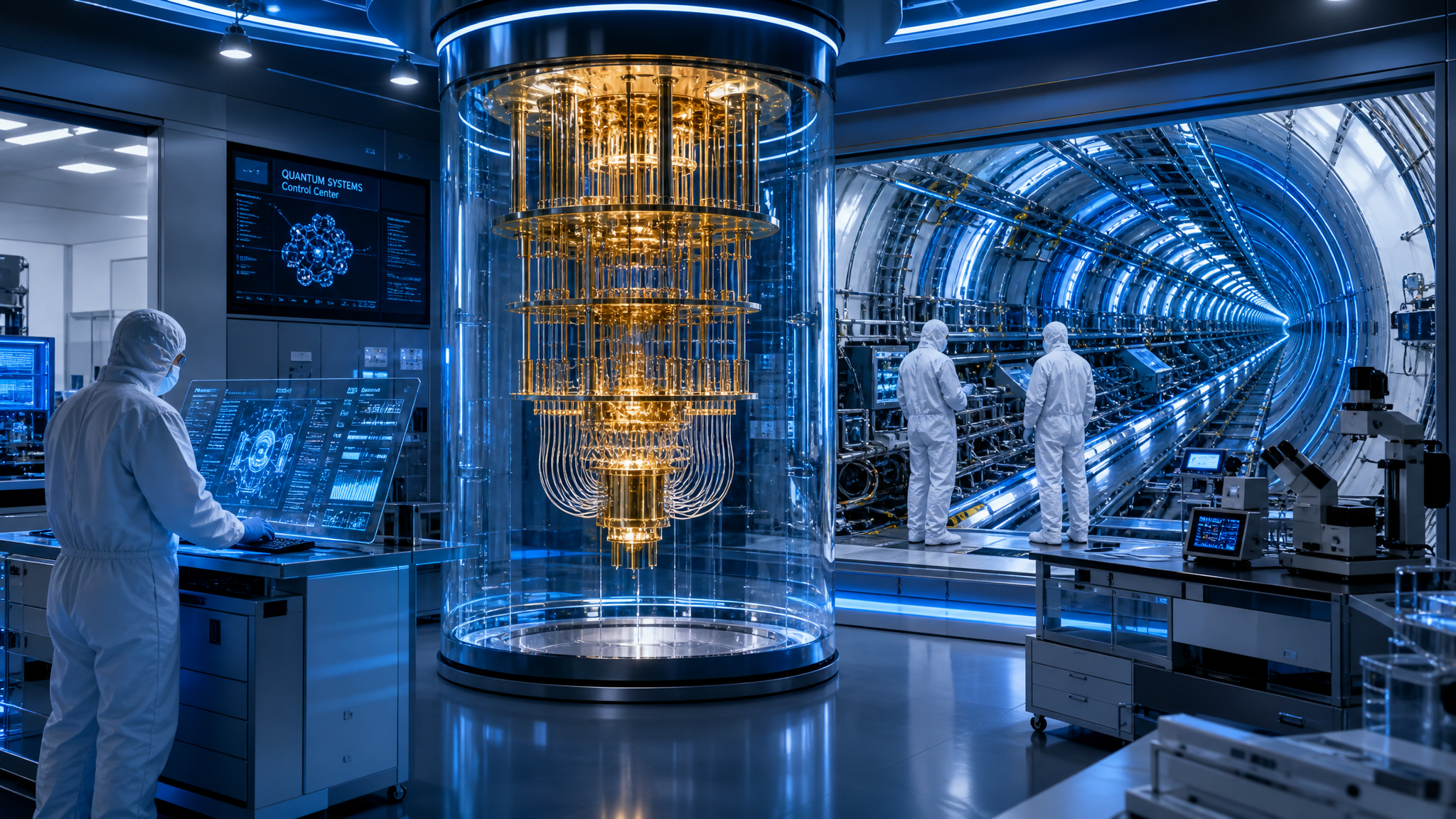
The US still produces some of the best science in the world, but China has surpassed it in scale. The NSF's latest indicators show China estimated to have surpassed the US as the largest performer of R&D in 2024, spending $1.028 trillion versus America's $1.009 trillion.
In global S&E publications, China accounts for 31% versus the US's 12%. Temporary visa holders earn 38% of US S&E doctorates, including 61% in computer science and 54% in engineering — a strength that becomes a vulnerability if talent leaves. US student performance in math and science has slipped from pre-pandemic levels.
The US participates in CERN's particle physics ecosystem without owning a comparable domestic facility. Quantum computing remains fiercely contested, with both nations racing toward practical quantum advantage. The challenge is scale, continuity, and the ability to keep talent on shore through stronger basic research funding and better STEM preparation.
The US still creates world-class science. The challenge is scale, continuity, and keeping talent onshore.
Action Required
- 1Increase federal basic research funding significantly
- 2Strengthen K-12 STEM education pipeline
- 3Retain international PhD talent through immigration reform
- 4Invest in next-generation research facilities
Defense & Military Technology
Securing the Future Battlespace

The US remains the world's most capable military power overall, but the gap is narrowing in domains that matter most in high-intensity conflict: hypersonics, cyber operations, autonomous systems, and drone warfare.
Russia has operational hypersonic systems like Avangard and Kinzhal; China fields the DF-17/DF-ZF. The US is still focused on prototypes rather than broad operational deployment. In cyberspace, CISA reports that PRC actors have maintained footholds in US critical infrastructure networks for as long as five years.
DJI holds roughly 70-80% of the global commercial drone market, giving China a massive hardware ecosystem advantage. The Pentagon's Replicator initiative acknowledges a critical truth: the US cannot outbuild China one expensive platform at a time. It must outproduce, outnetwork, and outadapt. The next conflict will reward industrial speed, not just exquisite technology.
The US cannot outbuild adversaries one expensive platform at a time. It must outproduce, outnetwork, and outadapt.
Action Required
- 1Accelerate hypersonic weapons development to operational deployment
- 2Mass-produce autonomous systems through Replicator and beyond
- 3Harden critical infrastructure against persistent cyber threats
- 4Develop effective counter-drone and counter-hypersonic defenses
The Gap Is Real.
So Is the Opportunity.
The United States still has the deepest innovation ecosystem in the world. The answer is not panic — it's national renewal: build faster, train more engineers, modernize the grid, fund science, and deploy technology at the speed of the century we're already in.